Film Review
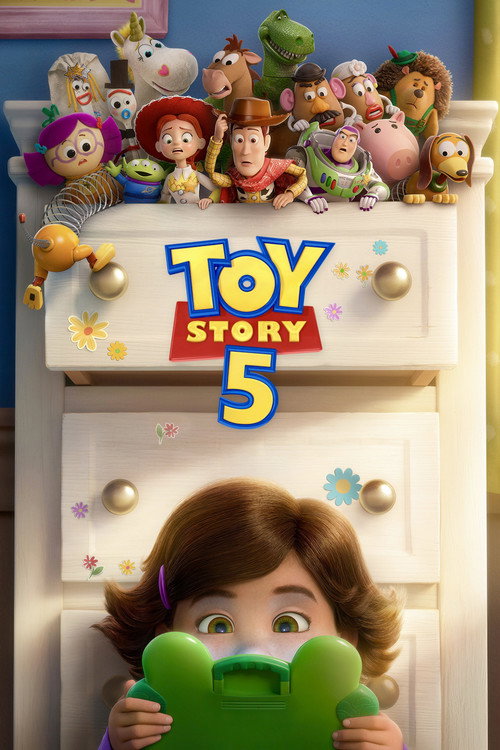
Toy Story 5
Tom Hanks · Tim Allen · Joan Cusack
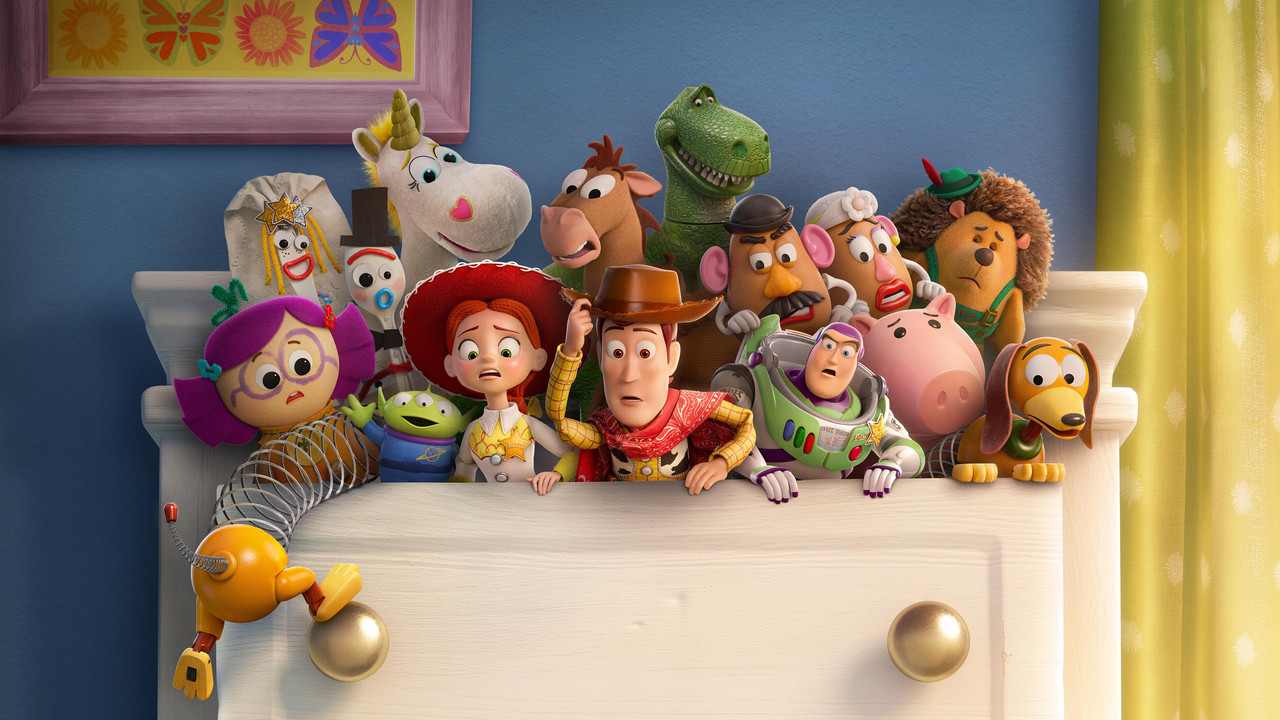
Toy Story 5 arrives with the machinery of a franchise that knows exactly how it works and the confidence to slow down anyway. Andrew Stanton, back in the director's chair on a series he helped build from the first film, makes a decision early that reorganizes the whole picture: he shifts the center of gravity onto Jessie. This is not a cosmetic swap. The old triangulation between Woody and Buzz, the axis every previous installment turned on, gives way to a room where Jessie is meant to hold things together, and the film keeps returning to what that responsibility costs. Joan Cusack's voice work carries the weight of the reassignment; the character has always had a live wire of panic under the twang, and here that panic gets somewhere to go.
Editorial Deep
Score breakdown, defended
Each dimension scores what it scores. The number is the claim; the prose is the defense.
Editorial Layer
Flat mean of the five dimensions below. Contributes 65% to the Skry Score.
The screenplay makes one genuinely strong structural decision — relocating the emotional center from the Woody-Buzz axis onto Jessie — and follows through on it with a character whose comic-relief origins make the new burden feel earned rather than assigned. The tablet-as-antagonist reframes the franchise's obsolescence motif as active competition rather than passive abandonment, a sharper premise than a conventional villain. But the writing is visibly straining in the connective stretches, reaching for the fourth film's ache and sometimes settling for its memory. The seams show; the machinery earns its best beats but leaves the necessity question partly open, which caps this below the top tier.
The animation is the cleanest the series has produced and, crucially, refuses to preen. Bob Pauley's production design pushes plastic, felt, and matte surfaces past anything the earlier films could render while keeping the frame handmade rather than clinical — a room reads as one specific cluttered child's space, not a rendering showcase. The upgrade is real and declines to announce itself, and the film's strongest images are its quietest: a single toy alone in a room, composed to let obsolescence register in the staging itself. That restraint at the frontier of the studio's technical capacity is the mark of controlled, confident image-making.
Cusack anchors the film by playing a character built for comedy who is now asked to hold a room together and isn't sure she can — that live wire of panic under the twang finally has somewhere to go, and it carries the picture's central risk. The returning ensemble slides back into rhythm with the ease of people who have done this four times, which is both the section's strength and, arguably, a limit: the comfort is real and reliable but occasionally reads as coasting. The vocal work sustains the tonal shift the direction demands, which is the harder job here.
At 102 minutes the film moves and earns most of its runtime, delivering reliable comedy and set pieces that land. The emotional spikes hit hardest in the silences — the waiting, the arithmetic of being outcompeted — where the film's rhythm slows with intent. It falters when it strains to justify its own existence, and those reaching passages sag against the surrounding momentum. The overall drive is strong without being sustained at peak, which places it comfortably above average but short of relentless.
The film rewards return chiefly through its quiet beats and the recontextualizing of the Jessie pivot, which reads differently once you know where it lands. The melancholy resolution invites a second pass. But the strained-necessity stretches don't gain on rewatch — if anything they become more visible — and the comedy, while dependable, doesn't deepen. It holds up as a solid revisit rather than an inexhaustible one.
It's better in its silences than its speeches, and it shifts a beloved franchise onto a new axis with more grace than the maneuver had any right to.
The animation is the cleanest the series has looked, and the interesting thing is how little it shows off. Bob Pauley's production design pushes the surfaces — plastic sheen, felt, the particular matte of a well-loved toy — past anything the earlier films could render, yet the frame still feels handmade rather than clinical. A room reads as a specific child's room, cluttered and lived in, not a demo reel. The upgrade is real and it declines to announce itself, which is the harder trick.
The engine of the plot is a smart tablet, a high-tech device that arrives to compete with the toys for the child's attention. Structurally it functions the way the villains of this franchise always have — as a pressure that forces the toys to define what they're for — but the specific shape of the threat gives the film a contemporary charge the earlier entries didn't have access to. The device doesn't want to hurt anyone. It just wants the attention, and it is very good at getting it. The film is smart enough to let that be genuinely unsettling rather than merely topical.
What's less settled is whether the picture justifies its own existence, and it would be dishonest to pretend the film fully answers the question it raises. There are stretches where the emotional machinery is visible — you can feel the film reaching for the ache of the fourth installment and occasionally landing on the memory of it rather than the thing itself. The comedy is reliable, the set pieces land, the returning ensemble slides back into rhythm with the ease of people who have done this four times before. Whether that ease is a virtue or a symptom is the real argument the film provokes.
At 102 minutes it moves, and it earns most of its running time. The best of it sits in the quiet beats — a toy alone in a room, waiting, doing the arithmetic on its own obsolescence. Those moments are where Stanton's version of this world has always lived, and they still work. The film is at its weakest when it strains to convince you it had to be made. It is at its strongest when it forgets to.
Beyond this line, spoilers
The Conversation
First-person welcome. Pushing back on consensus is a tool, not a formula.
Let me put my cards on the table: I came to this one braced for a cash-grab and left more moved than I wanted to be. That's the whole tension of Toy Story 5, and it's the tension the critical response has fractured along. Variety went all the way — comparing it to Abbey Road, a 'sublime summing up,' '(just maybe) a perfect ending.' Clarisse Loughrey at the Independent gave it two stars and filed it with the 'played out' camp. The BBC headlined the split. Both readings are available inside the same movie, and I think that's actually the honest thing to say about it.
The Jessie pivot is the choice that makes the film worth arguing about. Stanton has said he wanted to shift the focus to her, that she'd 'earned the right to run Bonnie's room,' and co-director McKenna Harris talked about a special connection to the character guiding the film's direction. You can feel both hands on it. Moving the emotional load off Woody-and-Buzz is a real structural risk, because that pairing is the franchise's load-bearing wall. It mostly works, and where it works it's because Cusack is doing something specific: playing a character who was built as comic relief and is now being asked to be the adult in the room, and who is visibly not sure she's up to it. That's the movie's best idea.
Now the tablet. Reading it as a 'cautionary message about children's technology' — which is where most of the positive reviews landed, and which the BBC foregrounded — is correct but a little flattening. What makes the device work is that it's not evil. It's attentive. It's better at being present than a toy in a drawer can be, and the film knows that's the actual horror. The franchise has always been about obsolescence — the toy in the box, the kid who grows up — and here the threat isn't being outgrown, it's being out-competed in real time by something that never sleeps. That's a sharper knife than a jealous villain, and Variety's gestured-at 'new theme' is presumably circling this. I wish I could tell you exactly how the film resolves it. I'll say only that the resolution is more melancholy than a fifth entry in a kids' franchise has any obligation to be, and it lands closer to the fourth film's register than the third's.
The dissent deserves respect, not dismissal. There's a genuinely useful observation floating around that this franchise — like Paddington — gets a critical free pass, and that positive reviews might be measuring goodwill rather than merit. I take that seriously. The $160M opening, a franchise record and second only to Incredibles 2 among animated debuts, tells you the goodwill is real and enormous. And a film riding that much affection should be graded harder, not softer. So here's my honest read: the craft is genuinely a step up, the Jessie gambit pays off more than it should, and the film is at least one draft short of earning the 'perfect ending' claim. When it strains to feel necessary, you can see the strain. When it stops trying and just sits with a toy in an empty room, it's as good as anything the series has done.
Is it the worst in the series, as one early critic claimed? No — that reads as fatigue talking, and fatigue is a fair thing to feel five films in, but it's not the same as the movie being bad. Is it the perfect capstone? Not quite. It's a strong, occasionally overreaching entry that's better in its silences than its speeches, and that shifts a beloved franchise onto a new axis with more grace than the maneuver had any right to. Whether it's the last one, nobody's confirmed. If it is, it's a dignified place to stop. If it isn't, the Jessie pivot has given them somewhere new to go.
Cast & Crew
Who made it, and who’s in it.
Cast
- Woody (voice)Tom Hanks
- Buzz Lightyear (voice)Tim Allen
- Jessie (voice)Joan Cusack
- Lilypad (voice)Greta Lee
- Smarty Pants (voice)Conan O'Brien
- Atlas (voice)Craig Robinson
- Snappy (voice)Shelby Rabara
- Forky (voice)Tony Hale
- Bonnie (voice)Scarlett Spears
- Bonnie’s Dad (voice)Jay Hernandez
- Bonnie's Mom (voice)Lori Alan
- Dolly (voice)Bonnie Hunt
Crew
- DirectorAndrew Stanton
- Director of PhotographyMatt Aspbury
- EditorJennifer Neysa Jew
- Original Music ComposerRandy Newman
About the Editor
Derik Silva
Editor-in-Chief
Derik founded The Skry to do for film and television what aggregator culture stopped doing — read closely, score honestly, and defend the score in writing. He believes the long arc is the only arc that matters: the films that earn their reputation by holding up over years, and the ones whose reputations have grown larger than the films can carry. Previously, he founded Travault.