Film Review
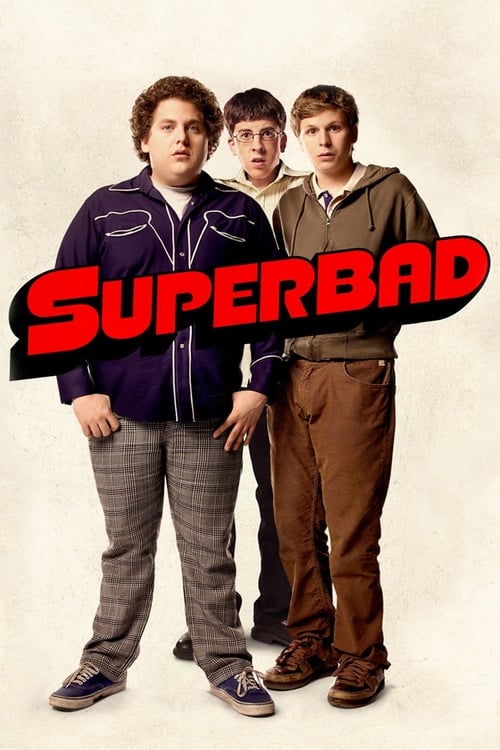
Superbad
Jonah Hill · Michael Cera · Christopher Mintz-Plasse
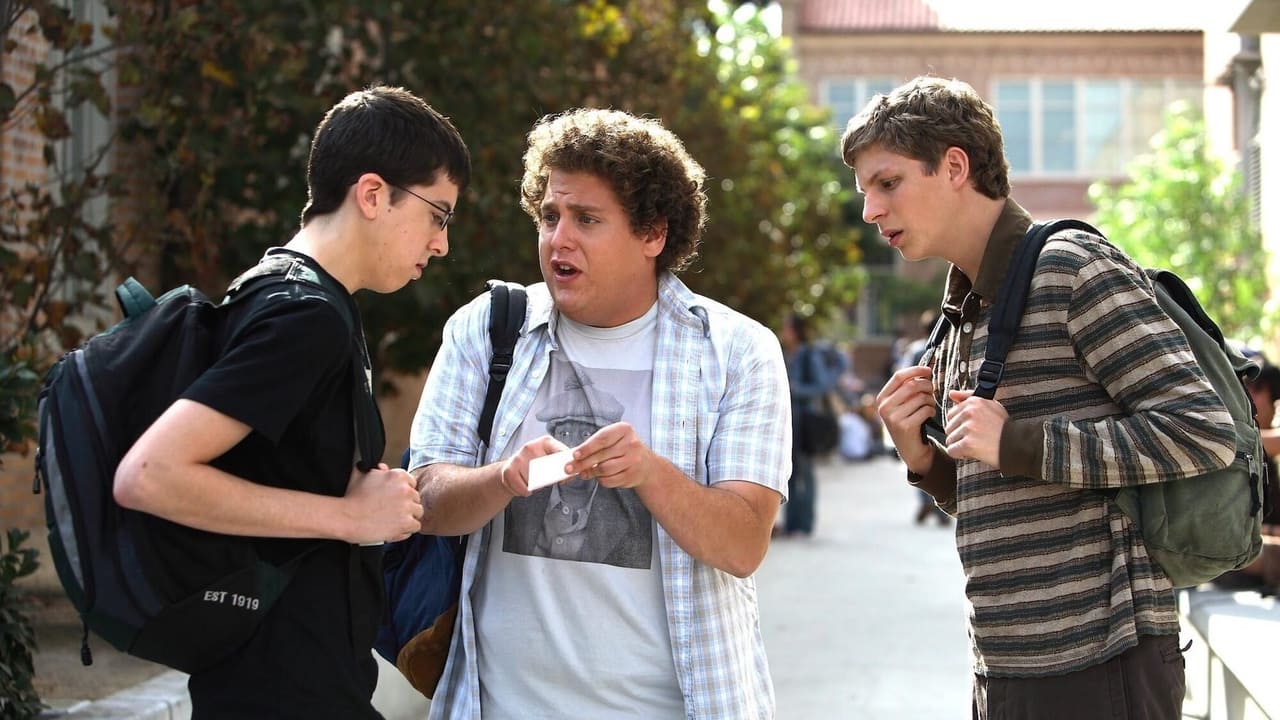
There is a governing anxiety in this movie, and it is not about sex or beer or the party everyone is trying to reach by the end of the night. It is about humiliation. The suburban high school that Greg Mottola stages functions as a low-grade panic machine, a place where every social transaction carries the risk of public shame, and the film runs on that dread the way a thriller runs on a ticking clock. Two friends want one last night to matter before graduation splits them. The plot is a delivery mechanism. The engine is fear of looking stupid.
Editorial Deep
Score breakdown, defended
Each dimension scores what it scores. The number is the claim; the prose is the defense.
Editorial Layer
Flat mean of the five dimensions below. Contributes 65% to the Skry Score.
The screenplay builds its comedy on a single sustained engine, the fear of public humiliation, and keeps the stakes small enough to stay funny while pitching them as emotionally total for the characters. Its autobiographical grain gives the dialogue a lived rhythm, and naming the leads after the writers signals how close the material sits to memory. The reliance on profanity is a real liability; several scenes lean on volume instead of construction, and the humiliation logic dates unevenly. Those weaknesses keep it out of the top tier without undermining a structure that mostly works.
Mottola shoots in clean, patient setups that hold actors in frame long enough for confidence to collapse into disaster, which is where the comedy lives. The digital capture reads warmer and grainier than the technology implies, giving the suburban milieu a lived-in texture rather than a flat modern sheen. The visual approach is consistent enough to carry across into his following feature, evidence of a settled authorial eye rather than a first-timer's luck. It is functional, unshowy craft in service of performance, and it does that job cleanly.
The ensemble is the film's strongest asset and carries it outright. Jonah Hill and Michael Cera build two opposed comic rhythms, appetite against flinch, and lock them into a friction that powers nearly every scene. Christopher Mintz-Plasse introduces a third register of unearned overconfidence that pays off repeatedly. Seth Rogen and Bill Hader work as adult chaos agents whose immaturity inverts the usual authority dynamic. The interplay is precise, the timing is shared rather than solo, and the performances hold the film's quietest final stretch when the comedy drops away entirely.
The night tightens with real momentum: the structure keeps pushing the characters toward a party that functions as a finish line, and the friendship underneath keeps surfacing through the noise. The humiliation dread gives ordinary scenes a low hum of tension that comedy rarely sustains this long. Enthusiasm at release ran genuinely hot, and the film's continued use as a benchmark shows the energy landed for a large audience. The profanity-heavy lulls cost it some drive, which keeps the momentum strong rather than relentless.
The film has held as a persistent reference point that newer teen comedies are still measured against, which is a durability few comedies of its moment achieved. The layered performances reward return viewing, and the structure holds up to a second pass. Against that, a credible line of criticism argues the jokes and attitudes have soured with time, and that reading has weight. The rewatch value is real but genuinely contested, which places it high without pushing it to the top.
Better built than its hangout-comedy reputation suggests, and more compromised than its defenders will admit.
Mottola came to this out of television, and the discipline shows. He shoots in clean, unfussy setups that keep the actors in frame long enough to let a scene curdle from confidence into disaster. The movie was captured digitally, but it carries a warmer, grainier texture than the technology would suggest, closer to film than to the flat sheen of most of its contemporaries. That look is not decoration. It softens the material's crudeness and roots the comedy in a recognizable place: fluorescent hallways, cramped kitchens, the specific ugliness of a house party lit by whatever bulbs happen to be on.
The casting is where the film earns its reputation. Jonah Hill plays loud, aggrieved appetite; Michael Cera plays the flinch. The two rhythms lock together, one pushing and one retreating, and most of the best scenes are simply the friction between them. Christopher Mintz-Plasse arrives as a third register entirely, a walking liability whose overconfidence is funnier because it is so plainly unearned. Around them, Seth Rogen and Bill Hader operate as adult chaos agents, playing authority figures who are less mature than the kids they are supposed to supervise. Emma Stone and Martha MacIsaac are given less room, but the film needs them as fixed points the boys keep orbiting and misreading.
The screenplay, written by Rogen and Evan Goldberg, has an autobiographical grain to it; the two leads carry the writers' own names. That closeness is why the profanity, however relentless, mostly reads as texture rather than shock. This is how a certain kind of teenager actually talks when adults are not listening. Whether the volume of it eventually dulls the jokes is a fair question, and the film does lean on it. There are stretches where a scene coasts on obscenity instead of building.
What holds is the shape underneath. The night tightens, the stakes stay comically small and emotionally enormous, and the friendship between the two leads keeps surfacing through the crudeness. I won't say where it lands. I'll only say the last stretch trades noise for something quieter, and the movie is confident enough to let the comedy drop out when the two central performances can carry the weight alone.
Beyond this line, spoilers
The Conversation
First-person welcome. Pushing back on consensus is a tool, not a formula.
I want to start with the thing that has followed this film for over a decade: people cannot stop measuring other teen comedies against it. Every few years a new high-school movie arrives and gets held up to this one like a ruler. Seth Rogen himself, who co-wrote and appears in it, went so far as to claim no good high-school movie had been made since, then walked it back when the response split down the middle. Some agreed it was the last authentic entry in the form. Others pointed to newer films and said the crown had already changed hands. I find the argument more interesting than the answer, because it tells you the movie became a category rather than just a title.
The durability question is where I want to sit, because it is genuinely contested and I don't think it should be flattened. Steve Pulaski treats the film as one of the best comedies of its generation, still rewatchable, and places Judd Apatow's producing presence in the 2000s alongside John Hughes's grip on the 1980s. That framing is generous to Apatow, who only produced here, but it captures something real about how the era's comedy got branded. Against that, there's a serious minority position that the jokes and the plot have not aged well, that a good deal of it reads now as patriarchal and, in the harshest reading, tangled up in rape-culture attitudes. I don't think you can wave that away. The film's engine of humiliation cuts in a lot of directions, and some of those directions have soured.
Willow Maclay's response is the one I keep returning to, because it refuses the easy binary. Maclay recalls that the loudest enthusiasm at release came from male audiences calling it the funniest thing they'd ever seen, while plenty of others simply could not find the way in. And Maclay is honest about being in the second group: you cannot force laughter at comedy that does not work on you. What makes the take valuable is that it separates two questions people usually mash together. Did the jokes land for me? And is the thing well made? Maclay says no to the first and yes to the second, conceding the direction is competent even when the humor misses. That is the right way to hold a comedy you don't personally laugh at.
On the direction, I think the Maclay concession undersells it slightly. This is the same filmmaker who made The Daytrippers and came up through Undeclared and Arrested Development, and the control shows. Two years later he made Adventureland, drawing on his own summers at an amusement park, and the two films share a visual character: the warm digital texture, the patience with actors, the willingness to let a scene breathe past its punchline. There's a continuous authorial hand here that the 'dumb teen movie' reading tends to miss.
The profanity critique deserves a straight answer too. One line of argument treats the constant four-letter volume as a structural flaw, comedy that dulls itself through repetition. I'm sympathetic in the abstract and unconvinced in practice. The swearing is characterization before it's a joke; it's the sound of teenagers performing an adulthood they haven't reached. When the film does coast on it, though, the criticism sticks, and those are the flattest stretches.
Where I land: the movie is better built than its reputation as a raunchy hangout comedy suggests, and more compromised than its defenders allow. Both things are true, and the argument between the two positions is the most alive part of the film's afterlife.
Cast & Crew
Who made it, and who’s in it.
Cast
- SethJonah Hill
- EvanMichael Cera
- FogellChristopher Mintz-Plasse
- Officer SlaterBill Hader
- Officer MichaelsSeth Rogen
- BeccaMartha MacIsaac
- JulesEmma Stone
- NicolaAviva Baumann
- Francis the DriverJoe Lo Truglio
- MarkKevin Corrigan
- Homeless GuyClement Blake
- Liquor Store CashierErica Vittina Phillips
Crew
- DirectorGreg Mottola
- WriterEvan Goldberg
- Director of PhotographyRuss T. Alsobrook
- EditorWilliam Kerr
- Original Music ComposerLyle Workman
About the Editor
Derik Silva
Editor-in-Chief
Derik founded The Skry to do for film and television what aggregator culture stopped doing — read closely, score honestly, and defend the score in writing. He believes the long arc is the only arc that matters: the films that earn their reputation by holding up over years, and the ones whose reputations have grown larger than the films can carry. Previously, he founded Travault.